



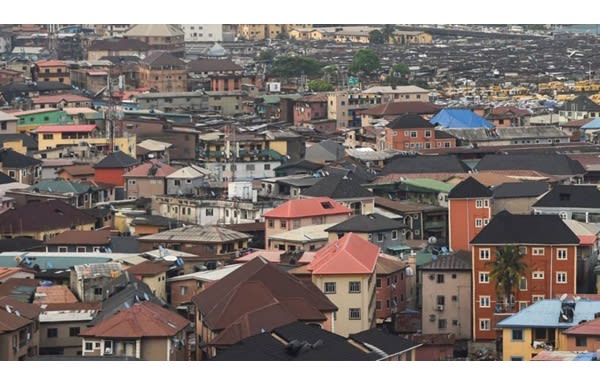
Across the length and breadth of Nigeria, citizens have been lamenting the skyrocketing rent. Regrettably, this has become one of the fastest-rising costs of living item. An unexpected trend, which has become a huge concern, is that apartments that rented for N700,000 or one million naira just a few years ago are now advertised for N3 million, N5 million or even higher. And these are often without significant improvements to the property itself.

Going by recent estimates, house rents in many Nigerian cities have surged by between 100 and 300 percent over the last two years, a pace that far exceeds the country’s official inflation rate and has placed unprecedented pressure on households already struggling with rising food, transportation and energy costs.




Nigeria’s housing crisis is no longer simply a property story. It has evolved into an economic emergency with profound implications for families, businesses, public health and national development.

Housing experts generally recommend that households spend no more than 30 percent of their income on accommodation. For many Nigerian families, that recommendation has become almost impossible to achieve.

Teachers, nurses, journalists, police officers, civil servants, young bankers, entrepreneurs, artisans and other middle-income earners increasingly devote more than half of their annual income to rent alone. For many, housing has become the single largest financial obligation, leaving very little for every other necessity of life.

In many locations, speculative pricing has taken hold. Some landlords have raised rents far beyond what can reasonably be attributed to maintenance or inflation, taking advantage of overwhelming demand and the severe shortage of available accommodation

Housing insecurity is also producing a less visible but equally damaging consequence for deteriorating mental health. The constant fear of eviction, the uncertainty surrounding annual rent reviews and the enormous pressure of raising large lump sums every one or two years create persistent psychological stress.

Nigeria has witnessed successive governments introducing affordable housing initiatives, mortgage schemes and public-private partnerships. While these programmes represent positive intentions, delivery has consistently fallen far behind growing demand. Housing experts argue that meaningful reform requires far more than constructing a limited number of housing estates.

Nigeria must simplify land acquisition processes, reduce infrastructure costs, expand mortgage accessibility, improve planning approvals, encourage private-sector investment in affordable housing and strengthen incentives for developers willing to build homes for middle- and low-income earners.

The truth is that if housing continues to consume an ever-growing share of household income, consumer spending, investment and long-term economic growth will ever remain constrained. Another key barrier that must be addressed quickly, as highlighted by researchers, are inflation, limited housing finance, weak regulatory enforcement and inconsistent policy implementation, which happen to be major bottlenecks to affordable housing delivery.

One key question that yearns for answers is whether it is not obvious to the government and other stakeholders that housing is far more than concrete walls, roofing sheets and painted ceilings? The fact is that shelter as the meaning implies, shapes educational outcomes, influences public health, determines productivity, strengthens families, supports social mobility and contributes directly to national competitiveness.

If the truth must be told, Nigeria’s rent crisis is therefore not merely about landlords and tenants. For a fact, it is about the future of work, family stability, economic opportunity and social justice. Clearly, it is about whether millions of hardworking citizens can enjoy the dignity that comes with secure and affordable housing.

More to Read

We Won’t Follow Atiku’s Path – APC Campaign Council Reacts To ‘Bola’ Remark

All Set for 2026 Youth Leadership Summit as NYC Oyo Chapter Announces Planning Committee

INEC Final List: Akinwale Olusayo Michael Congratulates KTJ, Elege, Other ADP Candidates Ahead of 2027 Elections

Stop Blaming Us – APC Tackles PDP Over Adebutu’s Exclusion From INEC List
TEACHERS’ DAY: OLATUNJI VOWS TO IMPROVE TEACHERS’ WELFARE, WORKING CONDITIONS AND REMUNERATION

WORLD TEACHERS’ DAY 2026: MUSIBAU ADESHINA SANUSI CELEBRATES TEACHERS, ADVOCATES BETTER WELFARE AND INCENTIVES

Oloyede Celebrates Teachers, Promises Renewed Focus on Education, Teachers’ Welfare in Oyo South

Comments (0)
Want to join the discussion?
or