

“NO MASQUERADE, I OWN THE STATEMENT” — JUBRIL DOTUN SANUSI FIRES BACK AT MOROHUNKOLA THOMAS


Says Makinde’s Administration Must Be Defended With Evidence, Not Adjectives
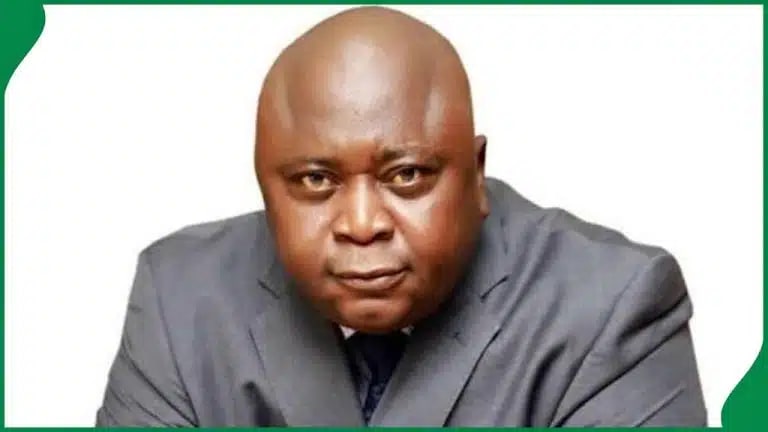
The Okanlomo Odua and Gbonka Olubadan of Ibadanland, Chief Jubril Dotun Sanusi, has dismissed insinuations that unidentified persons were behind his recent criticism of the administration of Oyo State Governor Seyi Makinde, declaring that there is “no masquerade” behind his statement.
Sanusi, who personally authored and signed the statement, said he stands firmly by every word and is prepared to defend his position in the full glare of public scrutiny.
He made the position known in a detailed response to an article by Ibadan-based lawyer, Mr. Morohunkola Thomas, who had described Sanusi’s earlier intervention as vague and called on the “real author or authors” to come forward and clearly state their grievances against Governor Makinde.
Responding, Sanusi said there was never any attempt to conceal his identity or convictions.
“There is no masquerade. The statement was mine. The convictions are mine. The concerns are mine. And I am prepared to defend every word in the full daylight of public scrutiny.”
The Ibadan high chief argued that the central issue should not be who authored the statement, but what available evidence reveals about the condition of the people of Oyo State after more than seven years of the Makinde administration.
“The real question is: After more than seven years of Governor Seyi Makinde’s administration, what does the evidence tell us about the condition of the people of Oyo State?” he asked.
Sanusi acknowledged that the Makinde administration had recorded notable achievements, including road and bridge construction, interventions in education, healthcare and agriculture, recruitment exercises and rural development projects.
He specifically recognised projects and initiatives such as the Oyo-Iseyin Road, recruitment of teachers, agricultural support programmes and the upgrading of primary healthcare centres.
However, he maintained that the existence of government projects should not automatically translate into a conclusion that the administration has delivered seven years of universally “people-friendly” governance and “quality projects.”
“Acknowledging projects is not the same thing as declaring seven years of universally ‘people-friendly’ governance. That distinction is fundamental,” he stated.
According to Sanusi, a proper assessment of governance must go beyond project commissioning and government publicity to measurable improvements in the lives of ordinary citizens.
He questioned whether poverty had declined, household purchasing power had improved, unemployment had fallen, and whether education and healthcare outcomes had significantly improved.
He also called for greater scrutiny of the state’s fiscal position, arguing that borrowing and debt obligations must form part of any objective assessment of the administration.
“A responsible government must be judged by both sides of its balance sheet: What did it build—and what did it obligate future taxpayers to pay?” he asked.
On poverty and welfare, Sanusi said roads, flyovers and public buildings alone could not constitute sufficient evidence that citizens’ living conditions had substantially improved.
“A road can be excellent while the household beside that road remains poor. A flyover can be useful while food prices destroy household purchasing power,” he said.
The business leader further called for measurable outcomes in education, healthcare and agriculture, insisting that government recruitment, infrastructure and intervention programmes should be evaluated based on their actual impact on citizens.
He urged the Oyo State Government to publish comparative data showing the state’s performance between 2019 and 2026 in education, healthcare, agriculture, employment and poverty reduction.
Sanusi also rejected suggestions that his intervention amounted to a personal attack on Governor Makinde, stressing that criticism of government should not be interpreted as hostility.
“There is no war between me and Governor Makinde,” he said.
“Governor Seyi Makinde is the Governor of Oyo State. He deserves the respect due to the office. But respect for an office does not mean silence.”
He explained that his earlier warning about the danger of “praise singers” was not directed at any particular individual but reflected a broader concern about political echo chambers surrounding people in positions of authority.
“A government surrounded by praise is not necessarily in danger. A government surrounded by praise and unable to hear criticism is,” he stated.
Sanusi added that every government needs people who are willing to speak honestly about policy failures, excessive project costs, public hardship, unfulfilled promises, questionable borrowing and poor quality control.
According to him, such individuals should not automatically be regarded as enemies of government.
In his response to Thomas, Sanusi challenged the Oyo State Government to publish a comprehensive 2019–2026 Governance Scorecard containing detailed information on total revenue, internally generated revenue, FAAC allocations, borrowing, domestic and external debt, debt servicing, capital and recurrent expenditure, infrastructure projects, education, healthcare, poverty, employment, agriculture, security expenditure, public assets, PPP agreements, project variations, procurement records and actual budget implementation.
He said the figures should be subjected to independent scrutiny by economists, engineers, accountants, academics, civil society organisations, journalists and ordinary citizens.
“That is the debate I want. Not insults. Not insinuations. Not ‘masquerade.’ Not ‘friends who became enemies.’ Facts. Figures. Documents. Outcomes,” Sanusi declared.
The Okanlomo Odua maintained that his intervention was driven by his commitment to the people and future of Oyo State rather than loyalty to any political party or individual.
“Oyo State belongs to all of us—not to PDP, APC or any individual politician. Government comes and goes. Governors come and go. Political parties come and go. But Oyo State remains,” he said.
Sanusi said he had no quarrel with Thomas for defending Governor Makinde but insisted that any defence of the administration must be based on verifiable evidence rather than political sentiments.
“If criticism requires facts, praise also requires facts. If a critic must identify the problem, government must demonstrate the solution,” he stated.
He concluded by calling for the conversation to move beyond personalities and focus instead on public accountability, transparency and the measurable impact of governance.
“There is no masquerade. The man who signed the statement is standing before you. And I am not afraid of the daylight.”
Share this story
More to Read
We Won’t Follow Atiku’s Path – APC Campaign Council Reacts To ‘Bola’ Remark

All Set for 2026 Youth Leadership Summit as NYC Oyo Chapter Announces Planning Committee
INEC Final List: Akinwale Olusayo Michael Congratulates KTJ, Elege, Other ADP Candidates Ahead of 2027 Elections
Stop Blaming Us – APC Tackles PDP Over Adebutu’s Exclusion From INEC List
Ogun 2027: PDP’s Adebutu Missing As INEC Releases Final Candidates’ List

Comments (0)
Want to join the discussion?
or