



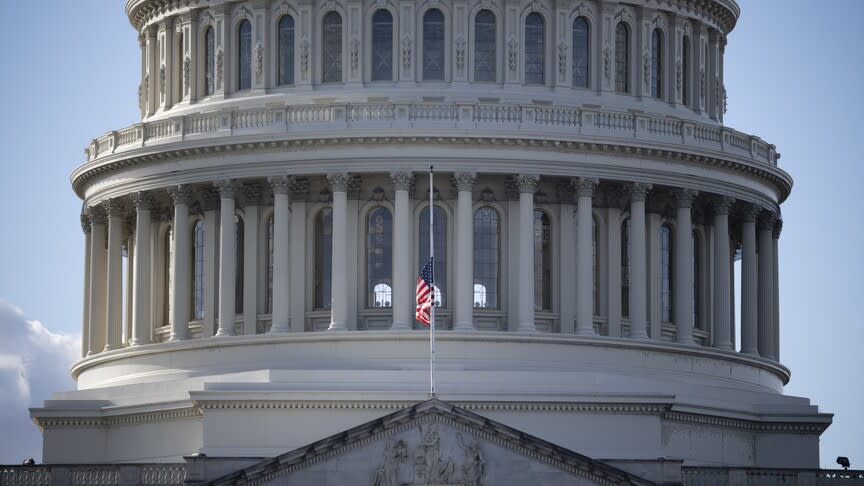
SENATE REJECTS WAR POWERS RESOLUTION IN CLOSE 47-48 VOTE AS U.S.-IRAN DEAL TAKES CENTER STAGE
The United States Senate on Tuesday rejected a war powers resolution aimed at compelling President Donald Trump to end military hostilities against Iran, marking the first congressional vote on the issue since the announcement of a new U.S.-Iran framework agreement.
The resolution, sponsored by Democratic Senator Raphael Warnock of Georgia, failed by a narrow margin of 47 votes to 48. The vote represents the ninth attempt this year by lawmakers to challenge the administration's military authority regarding Iran.
In a rare display of bipartisan division, four Republican senators — Bill Cassidy of Louisiana, Susan Collins of Maine, Lisa Murkowski of Alaska, and Rand Paul of Kentucky — crossed party lines to support the measure. Meanwhile, Democratic Senator John Fetterman of Pennsylvania broke ranks with his party to vote against the resolution.
The closely contested vote reflects ongoing debate within Congress over the balance of power between the legislative and executive branches in matters of war and foreign policy. Several lawmakers have expressed concerns about the details and implications of the recently announced agreement between Washington and Tehran.
Ahead of the vote, Senate Majority Leader John Thune and other members of Congress urged the Trump administration to provide lawmakers with a comprehensive briefing on the newly signed framework deal. Many legislators have called for greater transparency regarding the terms and commitments contained in the agreement.
Speaking on the sidelines of the G7 Summit in France, President Trump pledged to release the full text of the memorandum of understanding that was digitally signed between the United States and Iran on Sunday. He also announced plans to hold a press conference where he would present and explain the agreement in detail.
The Senate's decision underscores the deep political divisions surrounding U.S. foreign policy in the Middle East, while also highlighting growing congressional interest in overseeing military engagements and international agreements involving Iran.
As the administration prepares to unveil the full contents of the agreement, political observers expect continued debate on Capitol Hill over its implications for regional stability, national security, and the future of U.S.-Iran relations.
More to Read
We Won’t Follow Atiku’s Path – APC Campaign Council Reacts To ‘Bola’ Remark
All Set for 2026 Youth Leadership Summit as NYC Oyo Chapter Announces Planning Committee
INEC Final List: Akinwale Olusayo Michael Congratulates KTJ, Elege, Other ADP Candidates Ahead of 2027 Elections

Stop Blaming Us – APC Tackles PDP Over Adebutu’s Exclusion From INEC List
10 Major Highlights From Tinubu’s Independence Day Address

GLOBAL RECOGNITION: Jubril Dotun Sanusi Hails Amb. Kunle Yusuff’s Representation of Nigeria at UN Headquarters
Shettima Departs Abuja To Angola For AU Summit

Comments (0)
Want to join the discussion?
or