


Tinubu pushes ‘Africa First’ as the continent fights to keep more of its own wealth
At the Africa CEO Forum in Kigali, Nigeria’s Bola Ahmed Tinubu said Africa must stop feeding foreign industries with raw materials and start building industrial power of its own.

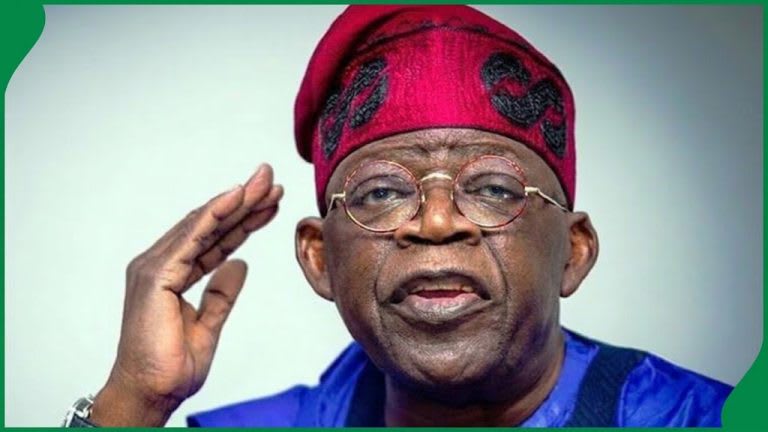
Nigerian President Bola Ahmed Tinubu has used the Africa CEO Forum in the Rwandan capital to deliver a forceful defence of economic nationalism, regional integration and African industrialisation. The continent, he argues, can no longer afford to remain an exporter of raw materials while depending on foreign powers for refining, manufacturing and finance.
Speaking during a presidential panel alongside Gabonese President Brice Clotaire Oligui Nguema on Thursday evening, Tinubu repeatedly returned to one central theme: Africa must stop outsourcing its future.
“We don’t want scavengers. We don’t want extractors,” Tinubu declared. “We want people to add value.”
The remarks came against the backdrop of rising global tensions linked to the Iran crisis and fears over disruptions around the Strait of Hormuz, developments that African leaders increasingly see as reminders of the continent’s dangerous dependence on external supply chains.
Dangote, refineries and ‘Africa First’
Tinubu argued that Africa’s vast reserves of oil, gas and critical minerals should serve as tools for industrial transformation rather than as sources of perpetual dependency.
“No one can take metal out of Nigeria without adding value. No one,” he said. “Go back to the days where you excavate the dust, all the minerals, and go? No.”
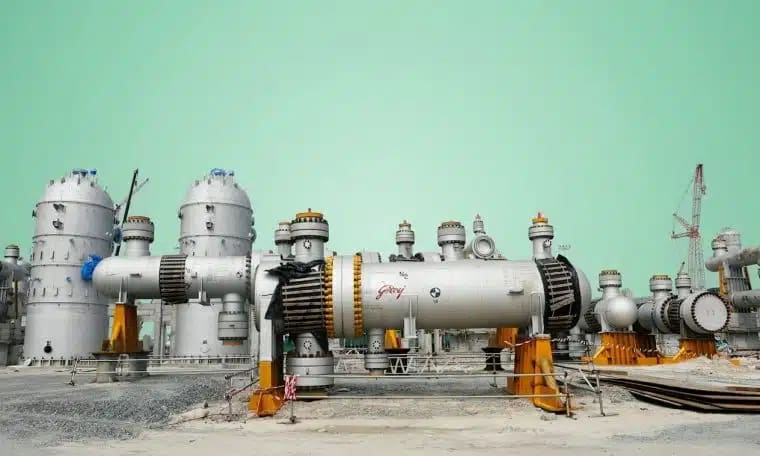
Tinubu cited the Dangote Group refinery as his clearest example of what African-led industrialisation could look like. Defending government support for the project, he argued that Nigeria’s survival during global energy shocks depended on domestic refining capacity.
Nigeria won’t be able to survive with over 200 million people in peace without a refinery,” Tinubu said, adding his government had supported the refinery by supplying crude oil in naira rather than dollars in order to shield the project from foreign exchange instability.
“I give you crude in naira, no letter of credit, no bank scrambling, and exchange rate instability,” he said.
Tinubu called on African countries to “put [their] money where [their] mouth is” by moving beyond fragmented national approaches and building stronger regional industrial and trade cooperation.
“Not working in silos, but in collaboration with one another using what we have,” he said.
The Nigerian leader positioned himself as an unapologetic advocate of “Africa First”, borrowing from his long-standing “Nigeria First” approach to economic policy.
“I believe in Africa first because I’ve started Nigeria first,” he said.
Cowardly investment
Much of Tinubu’s intervention focused on infrastructure, industrial financing and digital transformation. He argued that Africa must mobilise its own capital instead of relying excessively on Western institutions and aid structures.
“Investment is very cowardly,” he said. “Unless you are transparent, accountable and forthright.”
He also criticised the continued dominance of Western credit rating agencies and called for stronger African financial institutions capable of backing local industries and strategic projects.
At several moments, Tinubu linked Africa’s economic future to its youthful population, digital expansion and research investment, warning that the continent risked falling behind in the global technological race if governments failed to act aggressively.
“What Africa needs is to put funding in place for research and development,” he said. “They are highly intellectually inquisitive. Believe in them.”
Despite acknowledging the political and logistical obstacles facing continental integration, Tinubu insisted he remained optimistic about Africa’s trajectory.
“We have a very dynamic, youthful population, restless and not ready to take excuses,” he said. “If I don’t get them ready for that, they’ll vote me out.”
Europe as the integration model
Gabonese president Oligui Nguema pushed the argument even further, saying Africa must study how Europe used integration to build industrial and geopolitical strength. Pointing to the euro, the Schengen visa system, Airbus and Europe’s coordinated industrial policies, he argued that alliances had allowed European countries to compete globally despite their national differences.
“European countries have in common an aeronautical company, Airbus. Air France, which has expanded, has become KLM. Likewise, they have a common policy on steel, industry and agricultural policies,” he noted. “We must also have our economic alliances in Africa to be a powerful continent.”
For analysts, the message from both leaders reflects a growing mood across the continent, that Africa can no longer remain rich in resources but weak in industrial power, financing and global influence.
As geopolitical tensions rise and major powers compete more aggressively for minerals, energy and markets, many African policymakers increasingly regard regional integration and local industrialisation as economic necessities.
Elite fragmentation
Ovigwe Eguegu, a policy analyst at Development Reimagined, says one of Africa’s biggest historical obstacles has been “elite fragmentation” within and across countries, which has repeatedly undermined efforts to convert natural resource wealth into geoeconomic influence. But he argues that recent years have seen attempts to build stronger continental coordination through initiatives such as the African Renaissance Retreat, co-founded by Aliko Dangote and Paul Kagame, as well as the African Union’s Africa Mining Vision.
Share this story
More to Read
We Won’t Follow Atiku’s Path – APC Campaign Council Reacts To ‘Bola’ Remark
All Set for 2026 Youth Leadership Summit as NYC Oyo Chapter Announces Planning Committee
INEC Final List: Akinwale Olusayo Michael Congratulates KTJ, Elege, Other ADP Candidates Ahead of 2027 Elections
Stop Blaming Us – APC Tackles PDP Over Adebutu’s Exclusion From INEC List
Nigeria Will Start Producing What Africa Needs, Export Them With Pride – Tinubu Declares
Dangote Refinery Stops Petrol Sales To Importers
2027 Elections: ECOWAS Plans To Deploy Youth Observers In Nigeria
Comments (0)
Want to join the discussion?
or